
How ByStander Sentinel Could Have Changed the Outcome in the Nancy Guthrie Case—and How It Will Help Prevent Future Abduction
As the search continues in 2026 for Nancy Guthrie, communities are once again confronted with a painful question we ask far too often: What if help had arrived sooner?
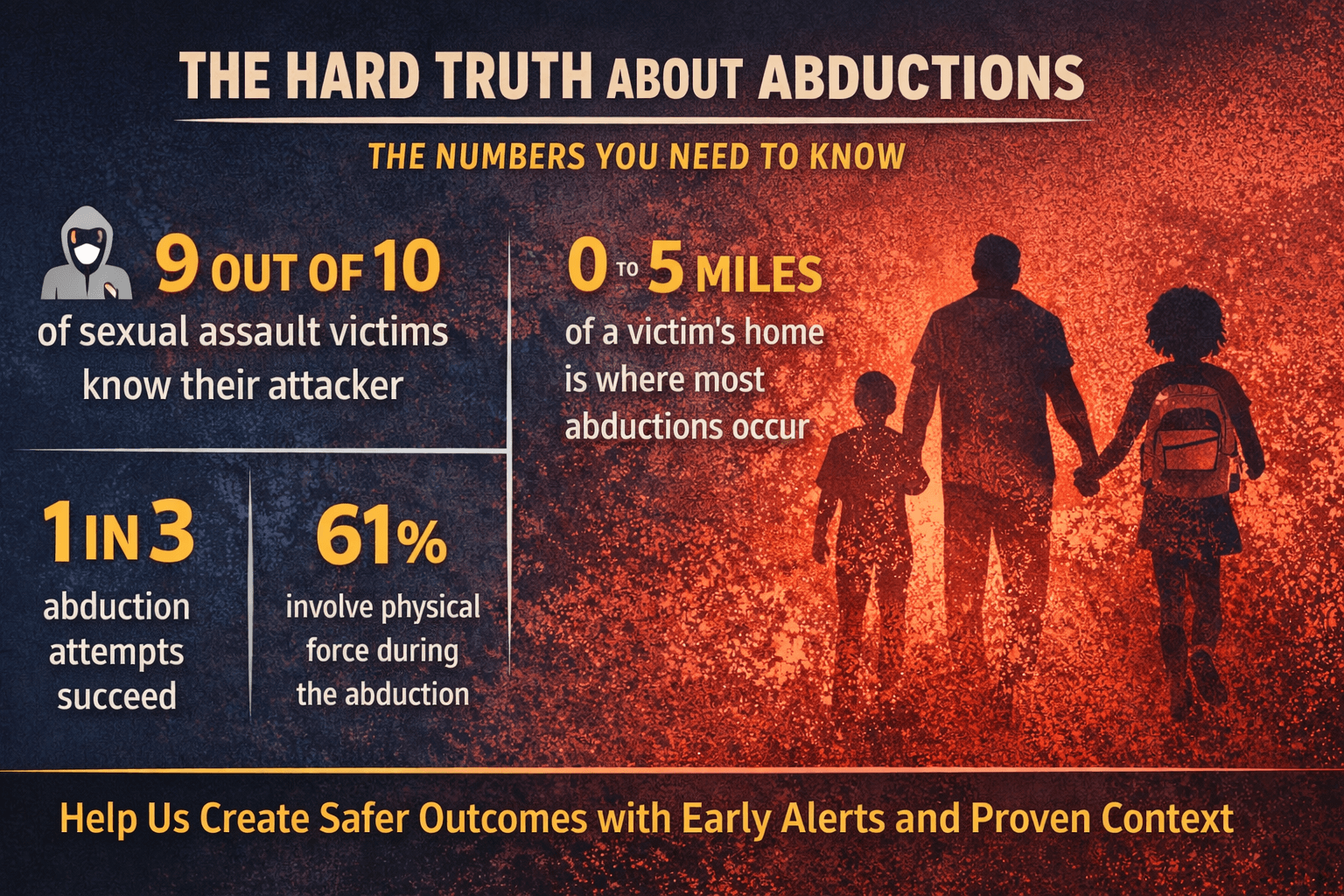
When a person goes missing, the window for intervention is brutally small. Minutes matter. Context matters. And most importantly, silence is often the enemy. Many abductions and disappearances do not begin with violence—they begin with unease, confusion, coercion, or a moment when someone knows something isn’t right but doesn’t yet feel justified calling 911.
This is the gap ByStander Sentinel was designed to close.
The Silent Minutes Before Everything Changes
In many real-world cases, individuals experience warning signs before they vanish:
- Being followed
- Feeling watched
- A forced “help” interaction
- A sudden deviation from routine
- Fear without clear proof of danger
In these moments, people often hesitate. They don’t want to overreact. They don’t want to cause alarm. And tragically, those moments are often the last chance to leave a digital trail.
ByStander Sentinel exists for that exact hesitation.
How ByStander Sentinel Could Have Made a Difference
Had a system like ByStander Sentinel been active during the moments leading up to Nancy Guthrie’s disappearance, several critical safeguards could have been triggered before she went missing:
1. One-Action Activation in a Moment of Fear
Sentinel is designed so that a user does not need to explain, dial, or justify. A single press initiates protection. No conversation. No delay.
2. Automatic GPS Location Capture
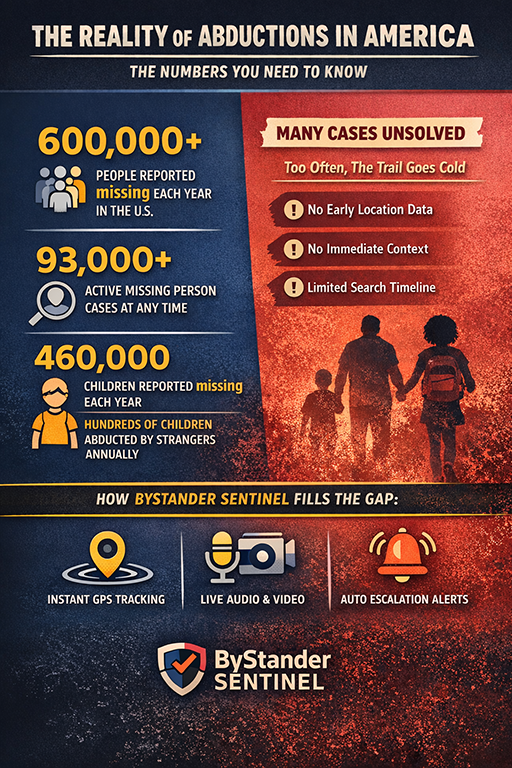
The moment Sentinel is activated, live location data is secured and shared with designated emergency contacts. Even if the device is later disabled, the last known coordinates are preserved.
3. Live Audio/Video Context (When Available)
Instead of investigators asking “What might have happened?”, Sentinel can provide real-time situational context—sounds, movement, voices, direction of travel.
4. Escalation Without User Intervention
If the user cannot cancel the alert with a PIN within a short safety window, Sentinel escalates automatically—alerting trusted contacts and, where enabled, trained safety advocates who can relay verified data to authorities.
5. A Timeline, Not Just a Name
Too many missing-person cases begin with a photo and a hope. Sentinel creates a timeline, which dramatically improves search accuracy and response coordination.
What Makes Sentinel Different From Traditional Safety Tools
Most personal safety tools are reactive. Sentinel is preventive and anticipatory.
- It assumes the user may lose the ability to speak
- It assumes fear may precede certainty
- It assumes help should move toward the user, not wait for a call
Sentinel does not ask, “Are you sure this is an emergency?”
It asks, “What if it is?”
Combatting Abductions Before They Become Disappearances
The long-term goal of ByStander Sentinel is not just response—it’s deterrence and disruption.
When potential abductors know:
- Location is being tracked
- Evidence may already be captured
- Third parties are alerted instantly
…the calculus changes.
Sentinel shifts power back to the individual in the most vulnerable moment—before isolation, before silence, before disappearance.
A Call for Prevention, Not Just Posters
As communities rally around Nancy Guthrie and others like her, we must confront a hard truth: awareness after the fact is not enough.
Posters help find people.
Technology helps keep them from going missing in the first place.
ByStander Sentinel was built for the moment when someone feels unsafe but doesn’t yet know how to prove it. For the moment when fear whispers before danger shouts.
If that moment is ever met with action instead of silence, fewer names will be added to search lists—and more people will make it home.